 Minenhle Gasa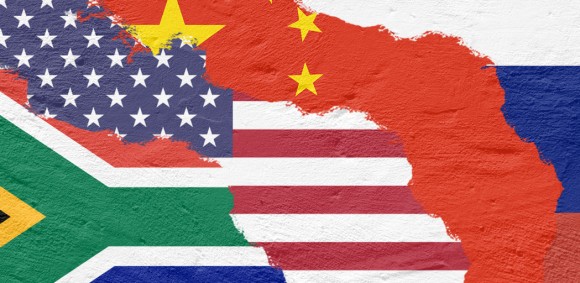
New world order? That is what’s dominating international news. This new world order sure has many implications. Our focus is on the economic side of things, eastern economies versus western economies. Which one is prevailing? And where do we find our country the Republic of South Africa? South Africa is well known as a developing economy, but many nations need our resources.
South Africa (SA) joined BRICS (known previously as BRIC) on the 24th of December 2010. Since then, there’ve been a lot of speculations about our nation choosing sides. With no formal declaration of choice, the trajectory of the world economy has changed a lot. The Economists call it the fragmentation of global finance. The major question is where are we in this fragmentation?
The United States (US) Dollar is well known as the world reserve currency, and recently the so called eastern economies have been pushing for what is called ‘de-dollarization’. Many scholars might associate BRICS with the philosophy of Eastern economies as China and Russia are among the major economies in BRICS and their history on the philosophy of socialism. It seems SA is fragmenting to the east, and the government on the other side seems to be a lot more centrist. Interestingly with the formation of the new ‘GNU’ in our country, we’re yet to see the trajectory of our international economics and finance. On the other side, there’s still the November election in the US which could change the whole landscape especially should ‘Trumponomics’ be implemented.
One might also wonder if choosing sides will benefit us or even better which is the winning side? The two opposite major economies, the US and China have had several years of what economists call a trade war. China’s economic growth over the years has been tremendous and is producing many things needed by the global population at cheap costs and therefore making a lot of net income. The US has responded to this rising competition by slashing China with huge tariffs. With the possibility of a Trump presidency surely the tariffs are here to stay and might be worse. All of this and many more are examples of how the global financial system has fragmented, with most countries looking for allies to help should any crises occur.
As a developing economy, it is in the best interest of our country and its citizens to look for allies on both sides rather than just firmly deciding to side with a certain specific country. Joining BRICS did show where our government’s philosophy lies, at the same time we’re still part of the AGOA which is an act that provides duty-free access to the USA market for almost all products exported from more than forty (40) eligible sub-Saharan African countries, including SA. This indicates we’re still dependent on/need investments and products from both these economically leading but divided countries. South Africa should instead try and work with both the eastern and western economies as we’re still trying to build the economy and reach some sort of self-sustenance. This will benefit a lot of people in our country as it opens a lot of channels to trade and increase our exports (a major contributor to a country’s GDP).
With elections shaking up the global economy and conflicts happening in Europe and the Middle East a lot of uncertainty remains globally. 2024 is turning out to be a major turning point as to how the future of the global economy will look like. Same time next year we might be living under unprecedented global policies due to the possibility of a ‘new world order’ or, are we already on the new world order? Paying close attention to what global leaders are saying might help one draw certain conclusions to this uncertainty we see all over.
Simply put, the new world order means a change in which country is on top of the food chain when it comes to economic power because that gives a country a lot of leverage. Judging by how things are happening we’re yet to see what’s happening, with the USA (currently no.1) facing problems with debt crises but the economy is still robust and growing. It’s an interesting and uncertain future ahead, we can only hope for better growth and opportunities. With many global superpowers pushing their agendas to suppress US dominance, it’s a process that will take years if not decades. South Africa can only hope for a centrist role and a government that will refrain from bad policy choices, poor governance, and weak leadership.
Coming to our economy, we’re still facing issues that have been hindering it for years. This is no sign of progress instead it’s a loop of promises and failure. High unemployment rates & government debt to GDP ratio at extreme levels, signal a government that keeps on spending without using labor to improve the government balance sheet. Besides having to ask/rely on our allies for help in improving our capital markets, the government has the utmost power to do it within. State owned enterprises (SOEs) are one of the most powerful tools the government could use to empower the economy, sadly most are being strangled by incompetent people hired by the government through deals mostly unknown to the public. The government budget is stretched by its interference in other African countries, and the money being ‘wasted’ servicing all these costs could be used to maintain our dying infrastructure and energy problems.
Now that is a mouthful of problems, to say the least, there are many other channels by which money created by our people is being lost that we would have to do an analysis issue by issue and calculate the costs. But the ‘GNU’ promises to be a vibrant and accountable government, we can only hope to see our money being used in the right places and help affect every SA citizen.
-MediaHouse150