 Mfundo Ndima
Who gets to have nuclear and why? What does it mean for status? These are questions that have recently resurfaced on the media and in academia when Israel in collaboration with the US carried missile strikes on Iran’s nuclear bases.
Who gets to have nuclear and why? What does it mean for a state to have nuclear, declare that it does possess nuclear capabilities, and showcase to the world its latest nuclear armaments? The answers to these critical nuclear possession questions have often emerged from the United States (US) policy in the assumption of a hegemonic international liberalist world order led by the US. Pyongyang in East Asia has in history been the irrational-evil state that can’t possess nuclear weapons as it would be a significant world threat, especially to Washington.
Late last year, mainstream media was engulfed with headlines of Pyongyang firing ballistic missiles ahead of the Asia-Pacific Economic Conference and the nuclear weaponry parade celebrating eight decades of the Worker’s Party. Beyond these recent headlines, Seoul is used to missile tests conducted by its neighbour which has often been interpreted as an act of deterrence. In history and now, Pyongyang has often fed to the US ontological nuclear security interest in the region which survives on the claim that North Korea cannot rationality possess nuclear weapons.
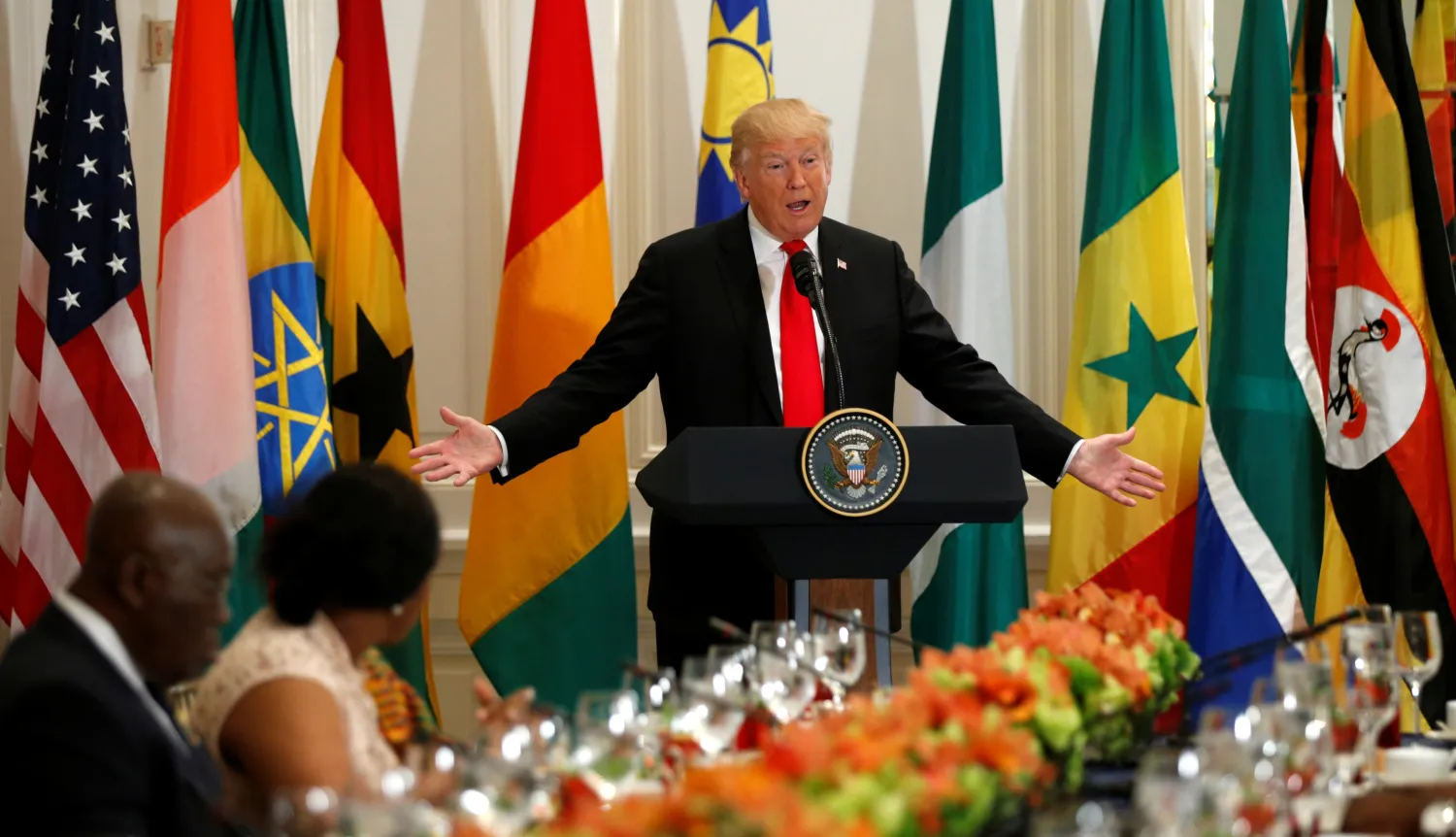
The Trump administration’s bromance with Pyongyang disrupts effectively this ontological security keeping alive US nuclear interests in the region. For trump to recognise Pyongyang as nuclear capable, it disrupts the long-standing US foreign policy conduct in the region. Trump has no problem with meeting Kim Jong Un, in his previous presidential term from 2017 to 2021 he met the North Korean leader in 2018 and as much as unfiltered Trump can be, he had no problem with Kim Jong Un and Pyongyang national interests.
Recently as Trump visited South Korea, he also had no problem again meeting Kim Jong Un. Even thou this did not materialise, the looming possibility of it materializing again presents a dilemma for those who have interests on the US ontological security in the region.
What is the conventional US ontological nuclear security?
Who gets to have nuclear and why? What does it mean for status? These are questions that have recently resurfaced on the media and in academia when Israel in collaboration with the US carried missile strikes on Iran’s nuclear bases. As contentious as these questions are in the International Relations field, Linus Hagstrom and Magnus Lundstrom (2019) employed an eclectic International Relations approach to argue to the US side that the solution to the enmity in its relations with North Korea can be both found in realism and constructivism.
In their endeavour to make their argument, they quote Giddens (1991), Berenskoetter (2014), and Rumelili (2015) as conceptualizing ontological security to be “a sese of continuity and order in events regarding identity and biographical continuity. Scholars agree that states’ ontological security-seeking is demonstrated in autobiographical narratives, in which the state is situated in the past, present and future, and differentiated from others.”
From the 1980’s to Biden and Trump, the US security interest in the Korean peninsula and East Asia has survived on the ontological building narrative that North Korea is a state that can’t rationally possess nuclear capability and part of the “axis of evil”. This US conventional ontological nuclear security-built narrative helps sustain the US hegemonic domination as it effectively makes Washington the principal that determines the criteria of who gets to have nuclear and why.
Trump’s disruptions
Although Trump’s disruption on conventional US security foreign policy conduct in the region can be short-lived to a presidential term, it presents a window of opportunity to expose just how the US ontological security stands solely on Western epistemologies of international relations of a hegemonic world order.
On the argument that Pyongyang feeds to this ontological security of the US, the matter of status is more of concern to Pyongyang. This is because the hegemonic international relations order contemporary dominant accepts nuclear capable states as superpowers. The benefits for this status go far beyond deterrence, and that is what Pyongyang is after.
Trumps disruption is twofold. First, it erodes the conventional ontological nuclear security of the US in the region. Secondly, it presents room for long term stability in the US-North Korea relations. Pyongyang has recently given the indication that it intends to double down on its nuclear program, and this can be conceived in the hegemonic world order as purely an act of survival. Be that as it may be, it does not in any way assist locate long term stability in the US-North Korea relations. What happens post the Trump administration maybe unknown but if the conventional policy returns, it would alter US-North Korea relations possibly for the worst.
In the case of Trump visiting North Korea again in his second presidential term, it would again invite another term dilemma for US diplomats who intend on keep alive the ontological security of US interest in the region. Of course, the advancing nuclear capability of North Korea is topical and of great interest to the nuclear non-proliferation treaty proponents, it remains as great national interests of Pyongyang to guarantee its survival and ultimately cement their superpower status in international relations.
If Trumps possible visits to Pyongyang materialize in his presidential term as US president, it would be an interesting dilemma for conventional US foreign policy proponents on the one side, and a strategic win coupled with a window of opportunity for Pyongyang to advance its national interest plans of gaining the superpower status.