 Cinga Mgandela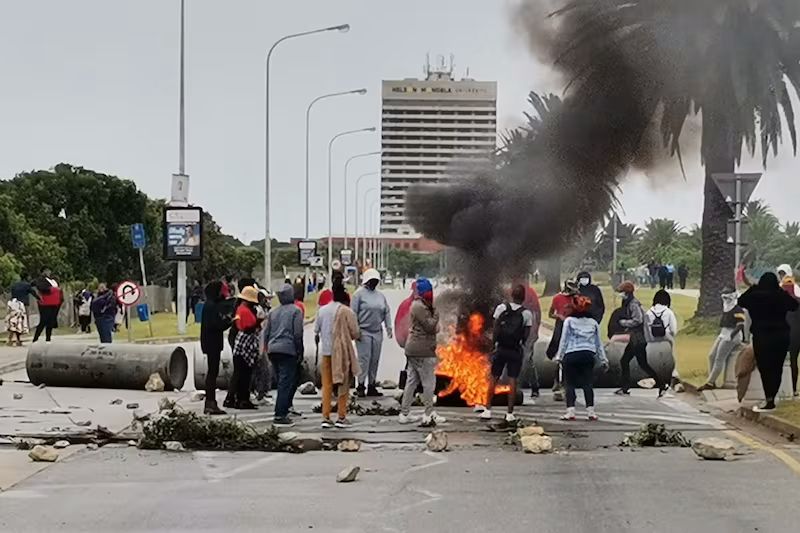
We cannot continue this cycle of “February outrage” followed by “March amnesia.” We cannot accept a reality where the start of the academic year is synonymous with the start of a conflict.If this institution wants to honour the name it carries, it must stop the shooting and start the listening.
There is a hollow, metallic feeling that comes with being told “you are the future” while being treated as a problem to be cleared from a roadway. At Nelson Mandela University (NMU), the administration’s recent communiqués have been clinical, almost hauntingly so. They speak of “operational continuity” and the “preservation of the academic project” as if these things exist in a sterile vacuum, entirely separate from the breathing, struggling students who make them possible. This language seeks to turn a human crisis into a logistical one, stripping away the faces of those who are simply asking for a chance to exist within these walls.
But when you move toward the Summerstrand gates, the clinical language of the boardroom dissolves. In its place is the acrid scent of scorched asphalt and a heavy, panicked silence. The university claims to be “open,” but it is an openness guarded by weapons and High Court interdicts. There is something deeply shameful about an institution of learning that responds to a student’s plea for basic dignity with the pull of a trigger.
Is this truly the “academic project” we are told to protect? One that requires a perimeter of private security to function? If a university can only remain “open” by pointing weapons at its own students, is it actually open at all? And what does it say about our progress when the most visible sign of a new academic year isn’t a textbook, but a protest?
The most exhausting part of this crisis is its predictability. Every February, we are forced to play our parts in a tragedy that has become a tradition. We have seen this movie before: the unfunded students, the accommodation shortages, the desperate scrambles for registration concessions.
Every year, management expresses “concern,” and every year, the same students are left behind. How many times must a student prove they are poor before they are allowed to be a scholar? How many February’s must be lost to the smoke before we admit that the system isn’t “glitching”; it is working exactly as it was designed, to exclude those without the means to pay their way into the future?
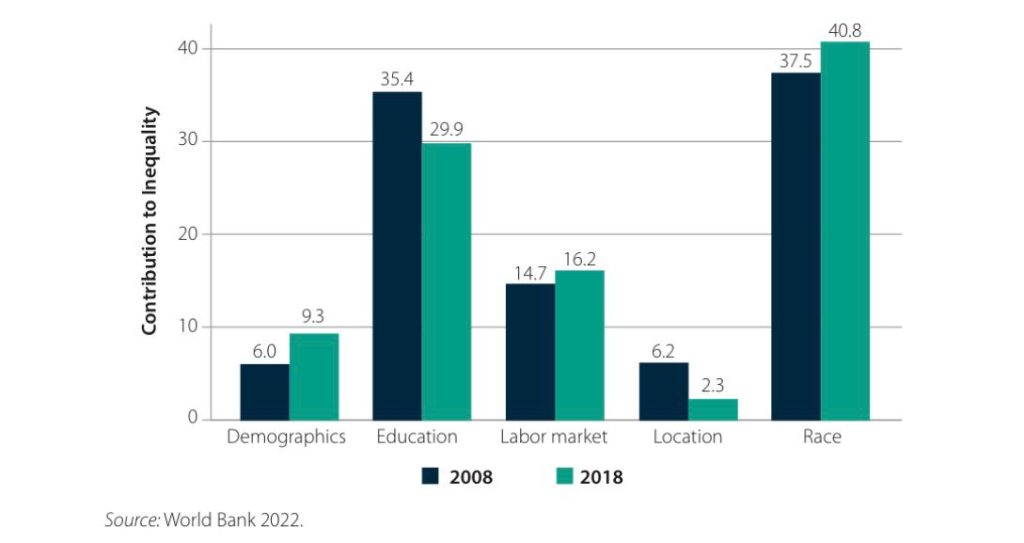
From this systematic note, further imperative questions arise. If the education financial system is architectured to purposely exclude those without means, what does this mean for the South African case study where inequality amongst citizens is extreme with the richest twenty percent (20%) of the population controlling almost seventy percent (70%) of national income. While the poorest twenty percent (20%) of the population controls only five percent (5%) of national income. More worryingly, this is an income inequality that is racialized by the historic legacies, and also an inequality in education attainment as more disadvantaged students are financially excluded from higher education.
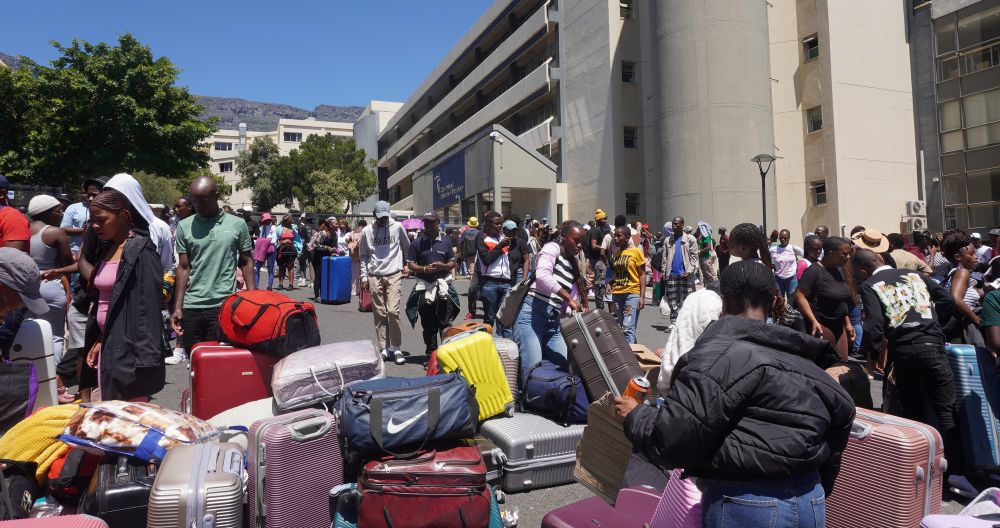
For us NMU students, the name on our degrees is “Mandela,” a man who spoke of education as the most powerful weapon to change the world. Yet, in February 2026, the only weapons being used are the ones pointed at the students. There is a profound irony in walking past a bust of Madiba only to be met by a security cordon. We are taught in our sociology and law modules about the “right to dignity,” yet that dignity is nowhere to be found when a student is forced to carry their life in a black garbage plastic bag because they have no bed, no funding, and no registration, worse on a foreign land.
When private security and police shoot at students, they are not merely dispersing “protesters.” They are shooting at young people who are fighting for the most fundamental requirements of an education. To see men in uniform firing rubber bullets at young people who are asking for a seat in a classroom is a profound moral failure.
It is a betrayal of the sanctuary a campus is supposed to provide. If we cannot find safety within the gates of a university, where in this country are we supposed to find it? If the people who are meant to mentor us are the ones authorizing the use of force against us, what exactly are they teaching us about the value of a human life?
By choosing to move academics online while the physical campus is in turmoil, management has created a fractured community. There are the “connected” students, who can retreat into the safety of Wi-Fi and stable housing, and the “excluded,” who are left to face the rubber bullets at the gates. This digital shift isn’t a solution; it is an evasion.
It allows the university to claim that “learning continues” while ignoring the fact that thousands are being left behind in the static. Is an education delivered via a muted Microsoft Teams Meeting while your classmates are being shot at in the street an education at all? Or is it simply a convenient way to ignore a conscience that should be screaming?
The university relies heavily on a Gqeberha High Court order to justify this force, as if legality is a substitute for morality. It is not. You can have a court order in your hand and still be on the wrong side of history. An interdict can clear a road, but it cannot house a student. It can stop a blockade, but it cannot fix a funding portal that has failed a thousand families.
If this institution wants to honour the name it carries, it must stop the shooting and start the listening. A university is not its buildings, its lawns, or its servers. It is a promise. A promise that if you work hard, you will be seen and supported. Right now, that promise is being buried under the sound of gunfire and the silence of a remote lecture. We are not asking for the world; we are asking for the university to finally become what it says it is on its brochures. We are asking for a seat at a table that isn’t guarded by a gun.
We cannot continue this cycle of “February outrage” followed by “March amnesia.” We cannot accept a reality where the start of the academic year is synonymous with the start of a conflict. If this institution wants to honour the name it carries, it must stop the shooting and start the listening.
We are asking, quite simply, for the chance to be students.
-MediaHouse150


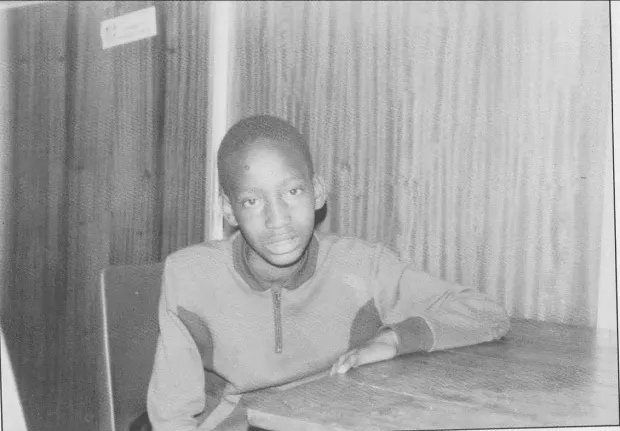


It is going to take time for all students to understand that the current setting of HE is not for the disadvantaged. It’s rather a gated community of knowledge and experience.