 Mfundo Ndima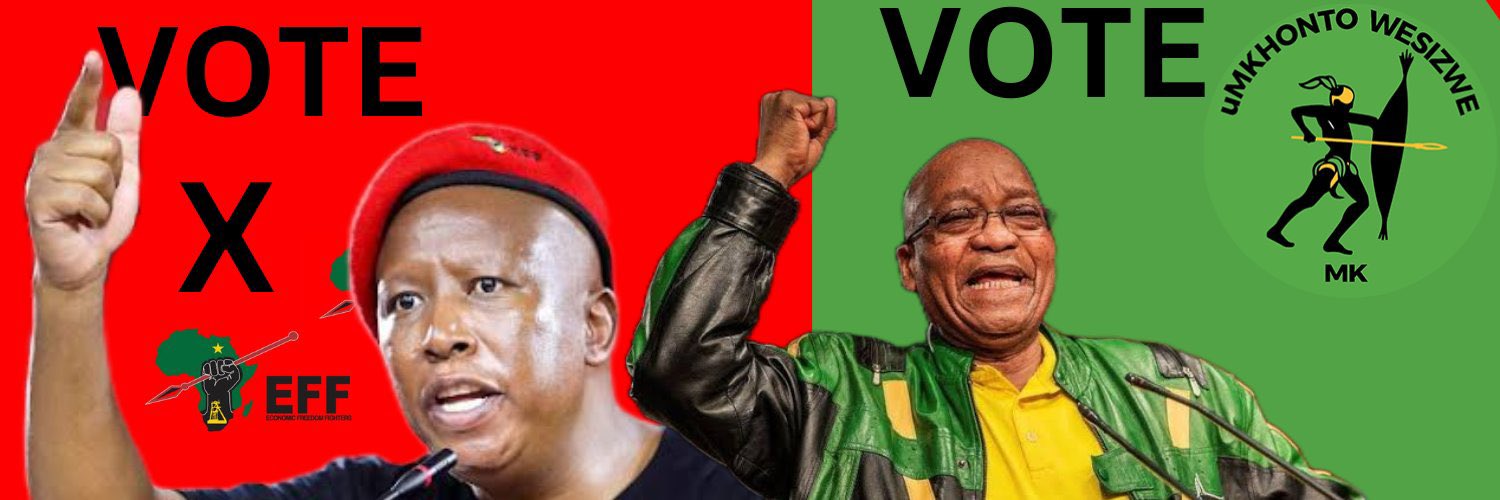
The essence or intrinsic element of democracy is that there be different interest groups that compete in a space and the majority interest rules. To assess the quality of a democracy further, both procedural and substantive perspectives must be fulfilled. In South Africa (SA), a multi-party democracy is imperative but a diverse political ideology approach to policies is a catalyst in representing the different class interests, especially given the history of our political economy.
The birth of the Economic Freedom Fighters (EFF) in 2013 gave a formal relevant left political policy approach in SA politics. This was further infused by the fearless confrontation of ‘normal’ policies in parliament. Simultaneously, this balanced the diverse interests of constitutes as the EFF grew electorally over the years. For these reasons also, it would be a breakneck to SA politics for the party to implode given its current internal dysfunctions, especially the departure of former DP and co-founder Floyd Shivambu and the vacancy of the seat.
The rise of Umkhonto WeSizwe (MK) party also speaks to a formal representation of a different interest group which also leans fairly to the left. In current trends, the infant party holds a parliamentary muscle of 58 seats (in 400 seats), it has lost a province where it got the most electoral support being outside of the Government of Provincial Unity (GPU) and has proven internally unstable lacking a national conference. Recently, it recruited Floyd Shivambu who has proven himself to be a scholarly politician in the Marxist scholarship.
Prof Southhall in 2022 argued that “the RET faction is difficult to define. It has no clear shape, leadership, membership, rules or policies. It is rather an aggregation of the aggrieved and aspirant within the African National Congress (ANC), linked by a set of broadly shared attitudes towards the state and power”. At the time of argument Prof Southhall was correct but it has been apparent that the aggrieved RET faction once within the ANC finally have a home in the MK party which has clear shape, membership, and policies. Both the MK party and the EFF are a peel-off from the ANC to consolidate a left political ideology bloc in SA politics. The strength and visibility of this bloc is the formation of the progressive caucus which indicated clear membership.
There are many speculations which relate to the recent move of Floyd Shivambu to the MK party. The speculations remain dynamic relating to personal relationships, power struggles, and ideological clashes. Either way, the EFF has been left internally weak and hollow and has a mission to regroup and practise throughout democratic centralism. The argument of a consolidating left bloc in this is that there seem to be a pollination of members between the parties as Dr Mpofu-Walsh terms the process. This speaks to a growing and maturing left bloc to influence SA politics in the legislature and policy design.
The tripartite alliance is also presented with a risk of death. Recent remarks by Secretary General, Solly Mapaila, unveiled the South African Communist Party’s (SACP) unhappiness being sidelined in the Government of National Unity (GNU) negotiations. This only proves the shrinking room of left politics in the ANC, rather, a growing left bloc in SA politics.
The intriguing questions are therefore, broadly do we see a growing left bloc or one which is declining? Has the instability within this bloc proven to be dangerous to its influence relevance in SA politics? Does the pollination of members between the parties which we have witnessed since the 2024 election prove to be a threat to some parties in the bloc?
In line with this questioning, it remains indisputable that SA politics can not afford this bloc to implode given what it offers in its manifestos and attitudes towards policy. It grows SA politics out of political stagnancy, which is unhealthy to our young democracy specifically in the eye of a neutral. Not only does it balance the scale of interests, but it also matures our democracy in the South African context given the history of our political economy from 1910 which Terreblanche and Nattrass explore extensively.
-MediaHouse150