 Lesedi Morwe Cinga Mgandela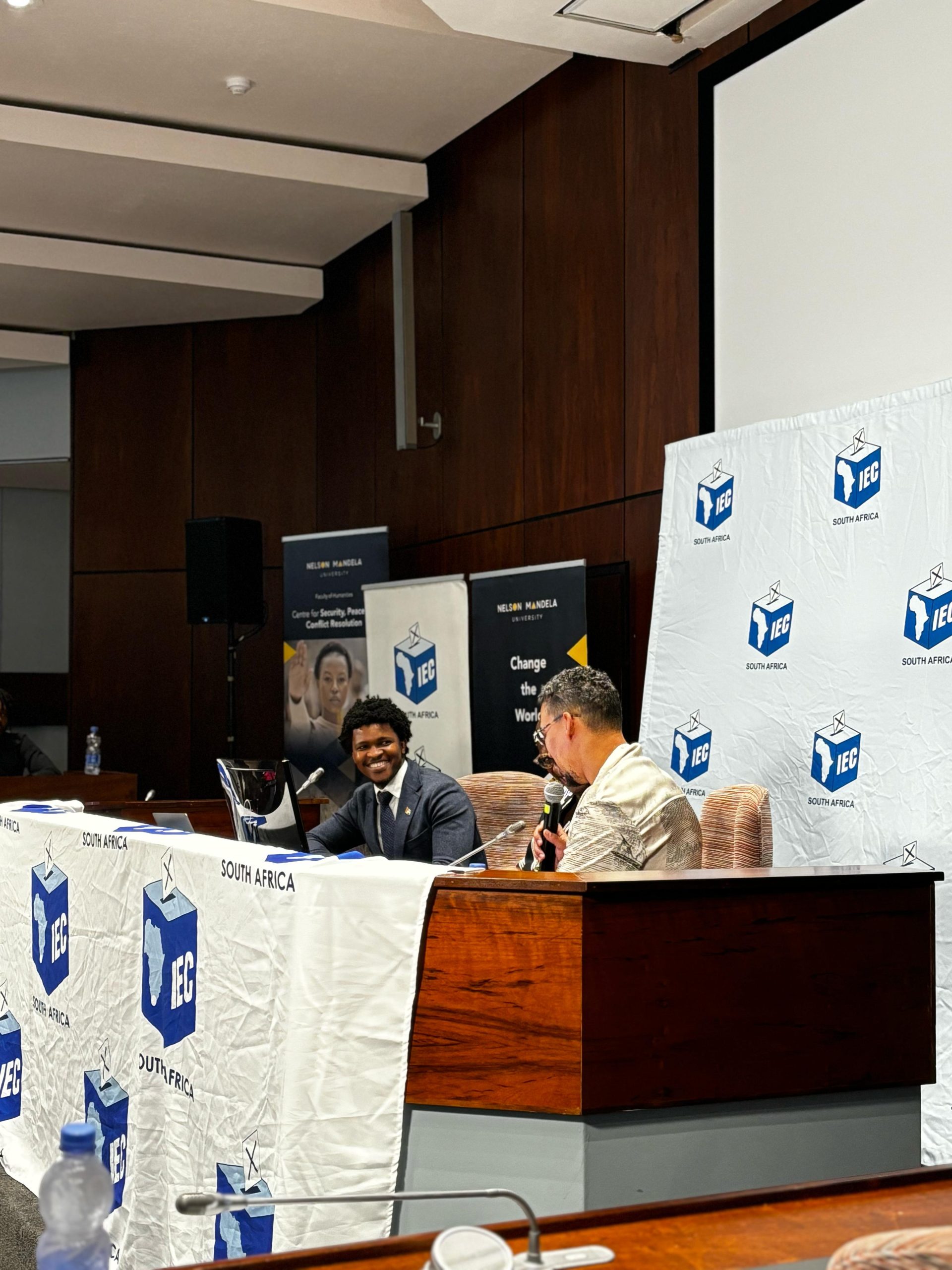
The role of the youth in South Africa’s (SA) democracy has been a hot topic for years, with a recent dialogue hosted by the Electoral Commission of SA (IEC) at Nelson Mandela University (NMU), shedding light on key issues like youth participation in politics, the struggle of unemployment, and the challenges preventing young people from voting.
SA’s youth make up a large portion of the population, yet many of them are not voting. Why? Political disillusionment, lack of trust in leaders, and simply not seeing the point of voting. Some young people feel that their votes won’t make a difference, while others just don’t have enough information about the importance of elections.
Experts at the dialogue, including political analysts and activists, stressed the need for better civic education. Dr Siyabulela Mandela pointed out that social media plays a huge role in shaping young people’s political views. While it can be a great tool for activism, it also spreads mis-information, which can make people even more skeptical about politics.
Audience members raised questions about e-voting, and the need to modernize elections. Some called for a transition away from manual vote counting. In response, Professor Ntsikelelo Benjamin Breakfast noted that while digital voting could reduce political apathy, it might disadvantage people without digital access.
Mrs. Aviwe Kwitshi-Mambo, a representative of the IEC, discussed voter uncertainty, and the need to understand power distribution in government. She questioned, “How do we allocate blame if we don’t understand the power allocation in government?”, and “If democracy is defined as by the people, for the people, and then how we govern something we have little knowledge about?”
The IEC and political activist are urging the youth to get involved in democracy. The full video of the discussion is available in the IEC Facebook page.
This publication first appeared on the MadibazNews outlet digital newspaper on 17 April 2025 (Term 1)