 Mfundo Ndima
Perhaps the demographic shift evident in all parts of the African continent has not settled and manifested in societies. South Africa is no exception, rather, a classic case study of youth isolation and deadening. My concerns in this discussion are to the record rejections and application of matric candidates to higher education learning institutions for 2025. Secondly, it is the dead silence of the youth politically in universities while they are being treated as invaders or trespasses on university premises. These two main concerns are part of the discussion which reveals a future not so bright for the fellow youth stuck between a gun, a book, or substance abuse.
To express these concerns fully on premise, it is a prerequisite to briefly unfurl the structure of the South African education system. The system is layered up into three levels and these include the General Education and Training (GET), Further Education and Training (FET), and Higher Education and Training. These layers face challenges collectively and independently, but the concluding fact is that there’s unequal access and quality in education, and almost an intentional perpetuation of the status quo. Basic education faces a challenge of a worsening literacy rate and comprehension of content. The PIRLS 2021 study revealed that 81% of South African grade 4 (GET) pupils can not read for meaning, and this is a worsening figure compared to that of 2016 which was 78%. Now you should be getting a glimpse of how crucial some of the challenges are.
However, it’s also imperative that in this discussion I offer the international eye or perspective of the South African education system. To plainly and simply put it to you, we are an interesting country that holds a dual status on how advanced and pedagogically clear our education system is. On the one hand, we hold a status which is one of the worst in the world and the continent and this is specifically from the public schooling attended by the majority. But on the other hand, we hold a world class status of best quality infrastructure and modernization which is specifically from private schooling attended by a few. This perspective fits perfectly the analogy of former President Mbeki of South Africa’s two-tier economic reality.
Record rejection and applications
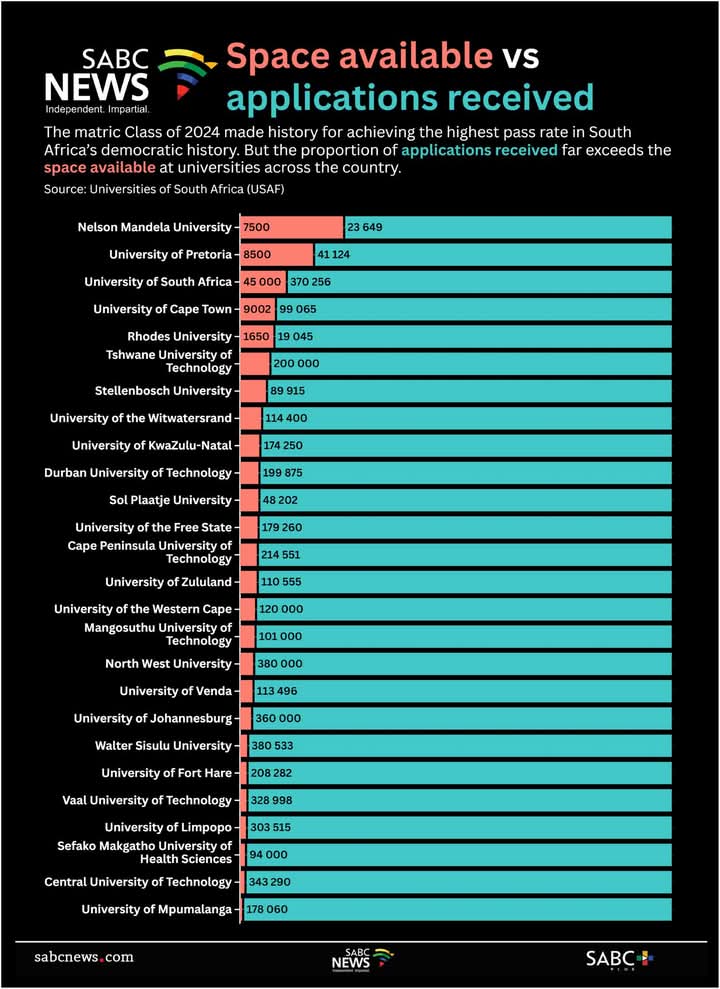
Since the release of the matric results 2024, social media and mainstream media have flooded with headlines of “university space constraints”. To the naked eye this is just a “space constraint” issue or inconvenience but not to the critical mind. The South African higher education system is administratively lacking and poor, which exacerbates the challenge of an imploding system as a result of inequalities. Lack of infrastructure and human capital investment in higher education is also an exacerbating factor to the challenges already present. The case is we do not need more universities to be built, we just need a fully maintained progressive and absorbing education system. As per the structural design of the education system, universities shouldn’t be the first and only available option for a candidate sitting on a matric desk. However, the mismanagement of TVET collages has tainted thier reputation leading to a trust deficit amongst the youth as a instruction to give valuable education and experience. As previously mentioned, it is almost like a there’s an intentional perpetuation of the status quo.
Moreover, the status quo in reference is the unequal access to quality education and its racialization. The 2015 #FeesmustFall movement echoed this status quo but worryingly it is merely overlooked in everyday scenario but witnessable to the eyes of a campus student every day. Intentional restriction to quality education continues to be more sophisticated and a complex matter to uncover in a few words and lines. But the confronted reality is that there’s unequal access to education in South Africa generally, worse, this is prevalent in all three layers of the structured education system.
Dead silence politically and consciously from the youth
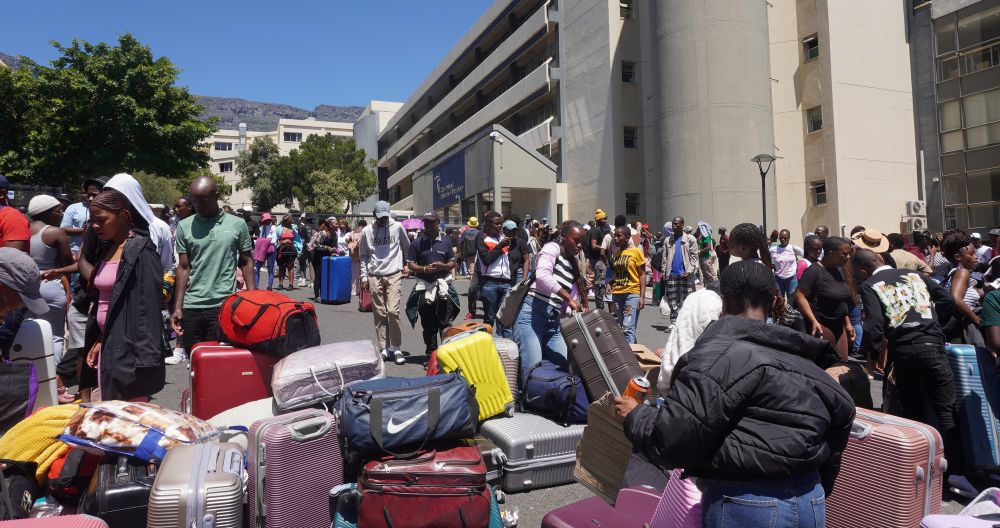
An upsetting reality is that students are treated almost as invaders, beggars, or trespasses on university premises. This has silenced the youth politically, intentionally killing student activism preparing them for chains. To get into a university in South Africa is a process by design which is discouraging. Every academic year cycle is a repetition of the same challenges of accommodation, registration, and funding. These challenges might somewhat seem linked but in fact are a chain reaction sourcing from a lack of political will and activism.
The current crises of too many applications in universities for too littles spaces is a consequence of the failures to maintain the entire education system. Opportunities for students are being treated as last on the country’s agenda list. Addressing the student inequality crises is a matter not even in the agenda. But the students have voices, No! that’s not the case. Students in universities are vain voice beggars unwelcomed whatsoever in the face of opportunity.
MediaHouse150