 Jeffrey Masinga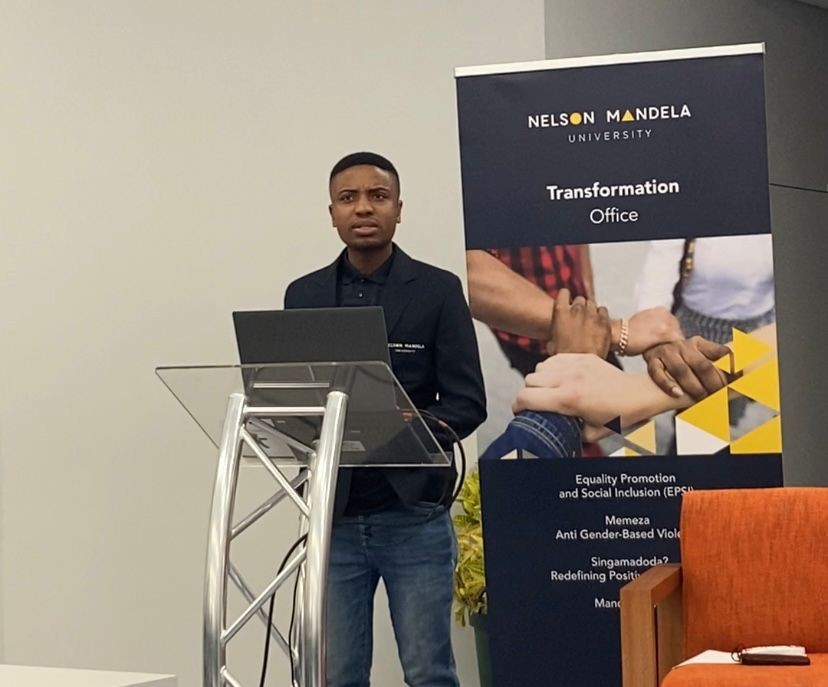
As universities across the country head into another cycle of Student Representative Council (SRC) elections, I feel compelled, both as a student who has walked the path of leadership at Nelson Mandela University (NMU) and as an outgoing SRC member to reflect openly on the state of student politics in our time.
This is not just an observation, it is a cry of concern. The situation, to put it bluntly, is terrible. It is as though there is a carefully concocted, well-funded plan to systematically destroy student politics and the essence of leadership development in our institutions.
What was once a noble platform to champion the rights, dignity, and living conditions of students has been hollowed out. The SRC has lost its essence. Once a place where future leaders were sharpened, trained, and tested to become quality leaders of tomorrow, it is now a shadow of its former self. Instead of serving as a vessel for critical thought, ideological clarity, ethical leadership, and collective resistance, the SRC in many universities has been reduced to nothing more than an extension of university management and have become a playground for opportunists who exploit the vulnerability and silence of students.
SRC offices are now operating as launchpads for political careers rather than platforms of service. Once inside, leaders forget the very people who placed them there, trading in student interests for patronage, connections, and individual gain.
It is against this backdrop that I write this reflective opinion piece to spark a conversation, to hold up a mirror to our reality, and to call for a rebirth of the student movement before the damage becomes permanent.
The Silence of Students
The first tragedy lies in the silence of the very constituency student leaders are meant to serve. Students themselves have, in many ways, surrendered their agency. Instead of critically analysing who represents them and why, they allow themselves to be pacified by material gimmicks during election season.
The equation has become simple: the more t-shirts you distribute, the higher your chances of winning. When we knock on doors during campaigns, many students do not ask about vision, accountability, or principle they ask for t-shirts. Leadership has been reduced to cheap handouts. This practice has bred mediocrity, because, when the price of power is a free garment the standards of leadership collapses.
In this silence and complacency, students unknowingly aid the very forces working to destroy their voice. By not demanding more, they legitimize the rise of leaders whose only qualification is access to campaign budgets, not genuine commitment.
Capture, Corruption and Criminality
A second dimension of the crisis is far darker. Across universities, management and external interests have realized the power of the SRC and rather than respecting it, they seek to control it. In many instances, few corrupt individuals in university management have vested interests in who sits in the SRC, and alliances are quietly formed with criminal service provider groupings to influence outcomes.
This convergence between corrupt management and external interests creates an environment where those who dare to resist face intimidation, harassment, or worse. The price of exposing corruption in the SRC can be your safety, your studies, or your life. This has created a chilling effect across universities in which those who are principled, those who want to serve, are pushed out, while opportunists thrive.
The shadow of violence hangs over student leadership, making genuine activism a dangerous pursuit. The message is clear, conform, or face consequences. Some of us are facing those consequences as I write this opinion piece.
In conclusion, historically, student politics in South Africa has been the heartbeat of national resistance. From the 1976 uprisings to the #FeesMustFall movement, students stood as the conscience of the nation, a moral compass pointing toward justice. Today, however, an entire generation risks losing the power of one of the most critical platforms of resistance in our history.
As I reflect on my journey at NMU, I see both the depths of decay and the flickers of hope. I write not in despair, but in determination: that students across this country must rise, must demand more, and must rebuild the student movement from the ground up.
If we fail to act, the silence, the capture, and the corruption will become permanent. But if we resist, if we tell our stories, if we dare to lead with principle, then student politics can once again be what it was always meant to be, the uncompromising voice of the people.
As a student of political science and sociology, and as someone who has witnessed these dynamics first-hand, I am convinced that unless we spark a national conversation about the death of student leadership, we will lose more than just our SRCs. We will lose one of the few remaining training grounds for ethical, principled, and courageous leaders capable of taking society forward.
This reflection is therefore also a call for students to wake up, to reclaim their voices, and to reimagine their role as the motive force of history. The state of crisis in student politics is not permanent, but it is real and unless we act now, collectively, consciously, and courageously, we risk producing a generation of leaders untrained, unprincipled, and unfit to inherit the future.
“Silence is complicity. Resistance is our only option.”
Izwelethu.
–MediaHouse150