 Tsoarelo Adriaan Rikhotso
AI is reshaping access to credit by using alternative data such as mobile money activity, airtime usage, and digital spending habits. This can help millions of people, especially young entrepreneurs and informal workers in Africa, secure loans for the first time. But without fairness checks and explainable models, these systems may repeat old biases in a new digital form.
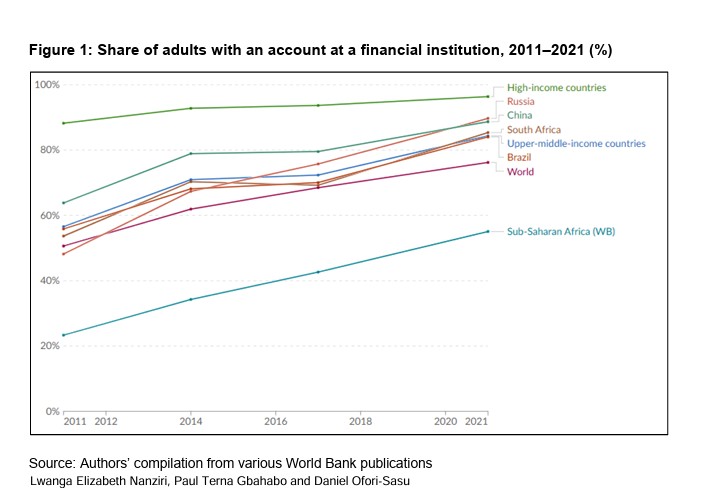
Normal banks use a strict set of rules to decide who gets a loan. If you do not have a formal credit history, a steady pay check, or property to use as collateral, the bank simply ignores you. According to the International Financial Corporation (IFC) report titled “Cracking the Credit Code: Alternative Data and AI for Financial Inclusion”, the traditional system has locked out nearly 1.3 billion unbanked adults and 3 billion people globally who lack a credit file. In Africa, where many young people make a living running informal businesses, being denied a loan is an everyday reality.
But a massive change is happening. New financial companies are using Artificial Intelligence (AI) to look at “alternative data”. Instead of asking for a bank statement, these AI models look at everyday digital habits including:
- Mobile Money Flows: Tracking how often you receive, transfer, or save money in your digital wallet to measure your income stability.
- Phone Habits: Looking at how regularly you top up your airtime or how long you have owned your SIM card as signs of reliability.
- Responsible Spending: Analyzing specific, positive habits, such as regular and timely school fee payments, which show good financial planning.
By turning these everyday digital footprints into a credit score, AI is giving millions of people their first real chance at getting a loan.
Real-world data shows this non-traditional model works. For example, a company called Eshandi uses mobile phone data to give out microloans in countries like Zambia and Kenya. Their AI models found that women are actually more reliable borrowers than men, allowing many women to successfully take out and repay multiple loans to grow their small businesses.
The Danger of the “Black Box”: The COMPAS Warning
However, at first glance, AI looks like the perfect tool for equal and fair financial inclusion. But before we trust AI to manage our finances fairly, we need to look at a famous cautionary tale from the United States (US) justice system. In 2016, an investigation revealed serious flaws in a machine learning algorithm called COMPAS. COMPAS was a tool used by judges to predict if a criminal was likely to commit another crime in the future.
The creators of COMPAS argued that the software was completely objective. It did not explicitly ask for the defendant’s race. Yet, the algorithm unfairly labelled Black defendants as high-risk at a much higher rate than white defendants. How did a “colourblind” computer program become biased?
The answer lies in how machine learning works. Algorithms are incredibly good at finding patterns. Even though COMPAS didn’t look at race, it asked questions like, “Was one of your parents ever sent to jail?” or “Do your friends take illegal drugs?”. Because of historical inequalities and heavily policed neighborhoods, these questions inadvertently targeted Black defendants. The algorithm used these details as a “proxy” (a stand-in) for race. In this case study AI didn’t solve discrimination; it just hid it behind complicated math.
The Proxy Trap in Financial AI.
If an algorithm used in the US justice system can misclassify people so badly, are we absolutely sure these new AI financial models are offering fair inclusion?
Just like the creators of COMPAS, financial engineers often design AI to be “demographically blind” by removing labels like gender, race, or age to comply with regulations. But just like COMPAS, these financial algorithms can fall into the “proxy trap”.
A financial AI trained algorithm might not know your gender or race, but it knows your location, the type of phone you use, and how you spend your time online. Because these digital habits are heavily tied to how much money you have and where you live, the AI can accidentally learn to discriminate. This creates a new problem called “digital redlining,” where the computer automatically denies loans to people from poor neighbourhoods, or women using shared mobile phones, simply because their digital footprint looks different.
How to make Financial AI Truly Fair?
To make sure AI actually help people instead of holding them back, financial companies need to stop pretending that “blind” algorithms are automatically fair. Here is how we can fix it:
- Test for Fairness: Programmers need to constantly audit their AI to ensure it is approving loans fairly across different groups of people.
- Look Behind the Curtain: Companies should safely track demographic data (like gender) behind the scenes, strictly to double-check that the AI isn’t secretly penalizing certain groups.
- Explainable AI: We must demand that algorithms be “explainable”. If a computer denies you a loan, the bank should be able to explain exactly why, rather than just blaming a “black box” calculation. This is where tools like SHAP (SHapley Additive exPlanations) come in.
SHAP is an explainable AI tool that acts like a mathematical translator. It breaks down a complicated model’s final decision and shows exactly how much weight each factor like your location, your airtime history, or your mobile wallet balance carried in the final decision. Instead of an automated rejection letter, SHAP allows the bank to give you a transparent checklist of what exactly caused the denial, making the system accountable and fair.
In short conclusion, AI has incredible potential to open up the financial world for Africa’s youth and entrepreneurs. But as the COMPAS algorithm proved, technology only reflects the data we feed it. If we want a truly fair future, we have to actively build fairness into the code.
–Mediahouse150







It is true that AI can advance financial inclusion in Africa. However, the revolution of AI has already twisted the future economics of African economic and tech dependency. Multinational companies like google and others are already monopolizing the data center investments infrastructure in Africa.