 Mfundo Ndima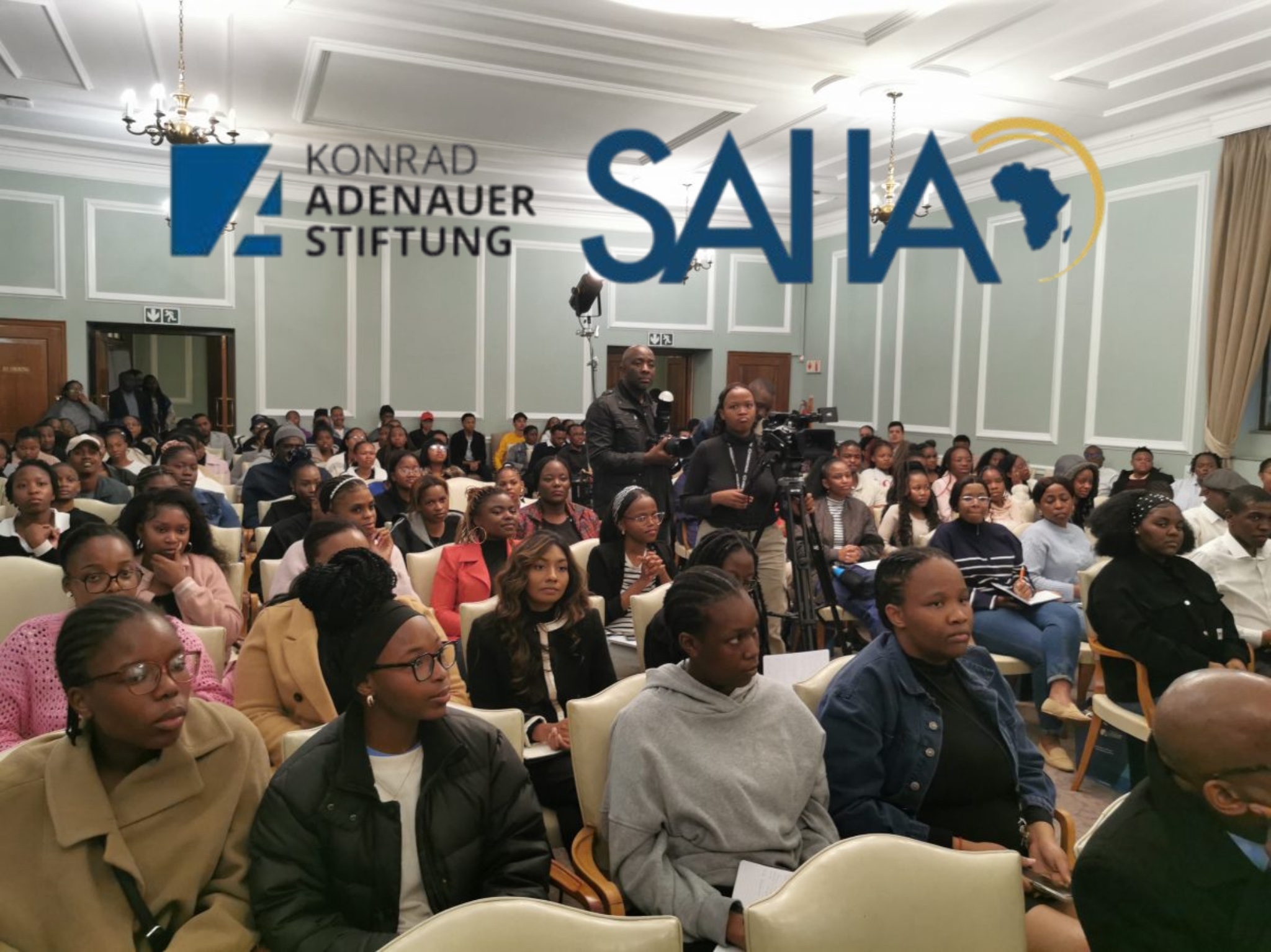
Is a humanities degree still valuable in a world shaped by artificial intelligence, automation, and big data? This opinion article reflects on insights from the 2026 KAS-SAIIA Humanities Careers Event, highlighting why humanities graduates remain essential in today’s workforce. It explores the evolving career opportunities, skills, and relevance of Humanities Social Science graduates in the Fourth Industrial Revolution.
After graduating, what can I do with my humanities degree? As a Humanities Social Science graduate, do I still have value in the 21st century age of automation and big data? What skill sets do I render to the contemporary workforce of Artificial Intelligence (AI)? Aibo, is my degree useless as a Humanities Social Science graduate?
On a cold breezy Wednesday at Wits University, these are the questions that filled the room during the KAS-SAIIA Johannesburg Careers Event 2026 themed, Beyond the Degree: Humanities Careers in a Transitioning World. The foyer at the head office of the South African Institute of International Affairs (SAIIA) hosted the collaborative spirit of this career event kicking off with an one hour exhibition of Konrad Adenauer Stiftung (KAS), United Nations Development Programme (UNDP) volunteers, University of Pretoria Politics Department, Public Affairs Research Institute (PARI), University of the Witwatersrand Association of International Relations Students (Wits AIRS) amongst others. It is thanks to the longstanding KAS-SAIIA relationship that such a space is curated for humanities graduate

Glued to the white leather of my seat, I was treated with a keynote address from Dr Ekeminiabasi Eyita-Okon. After her address, a well curated panel discussion of Humanities graduate success took over the room. Moderated by Luanda Mpungose, the panel discussion included Raymond Matlala, Dr Margaret Monyani, Amahle-Imvelo Jaxa, Dr Phakamisa Siyothula, and Cynthia Chigwenya.

Now, begin to imagine closed doors with critical thinkers having a critical discussion on how they can evolve and adapt themselves to a world that presents their skills sets as automatable and irrelevant to the forth coming 4th Industrial Revolution. A sharing of experiences, knowledge’s, and a networking session on furthering the work of humanities together.
STEM vs Humanities
With her welcoming remarks, Ms. Elizabeth Sidiropoulous made reference to challenging the dominance of Science, Technology, Engineering, and Mathematics (STEM) programs over the humanities programs as most relevant to the future world. What she welcomed us with was an observation that humanities is the catalyst of what the future holds between humans and machines. Dr. Holger Dix followed to emphasize on this by referencing the Humanities Social Science graduate experience of entering a job market with what relatively seems as an redundant or no longer relevant qualification.
The room wasn’t however filled with challenging the STEM vs Humanities narrative, in fact, it was more overtaken by the extended discussion on finding a complementarity between the STEM and Humanities programs.
Keynote Address: What to do with a humanities degree?
Dr Ekeminiabasi Eyita-Okon opened her keynote address joining the welcoming remarks main point, the relevancy of humanities. She proceeded to point out the 21st century paradox where a relationship between humans and machines evolves. This is a relationship marked by the automation for substituting the human, the bots as more like human and more “intelligent“. But even in this relationship, a Bachelor of Arts degree is still very much relevant. A BA graduate is equipped with the ability and composed skills to problematicize society. In context, this includes asking the ethical questions about innovations such as AI or probing responsibility questions through power relations and reading between the lines. Furthermore, having submerged him or herself to the intense tasks of analytical reading, writing, and discussing, a BA graduate posses a critical thinking skill on the works of society, a very broad one at that.

Machines are mostly brilliant in finding a pattern. That is how they learn and give future possible scenario’s. However, the human reserves the ability to critically process, evaluate, and still remain with epistemic humanity. The skills of critical thinking, writing, and researching are not “soft skills” to have in humanities or anywhere. They are more off critical invaluable skills to possess over the machines.
Humans reserve the ability and skill of contextual intelligence. Let’s take big data for illustration, the tidying to presentation of the big data is largely done by the computer on human input demand. It is the human, however, that gives context to the clean and communicable data output. Therefore, humanities graduates carry this skill mostly crafted in courses such as “Data science for Humanities”.
However, the elephant in the room being addressed was how do we humanities graduate transition from lecture halls to a career?
Firstly, let us do away with the fallacy that corporations have no space for humanities graduates. Companies like Klynveld Peat Marwick Goerdeler (KMPG), PricewaterhouseCoopers (PwC), Deloitte, Google and others, are actively recruiting humanities graduates. Our everyday commercial banks – Nedbank, Absa, Standard Bank, FNB – too have consistently recruited humanities graduates. A career exists for humanities graduates beyond the “go to areas” of government and academia. Consulting is one evolving business that requires mostly a humanities skill set.
Secondly, humanities graduates have utilized the presented opportunity to diversify their skill set beyond critical thinking, researching, or writing – the so called soft skilled. Security scholars are deep in the science of nuclear enrichment and AI warfare, climate activist are also deep into the ecological science of burning fossil fuels and deforestation. Both these humanities fields have equipped humanities with knowledge and skills originally outside humanities. Big data analytics too have been included in the humanities graduate skills sets. The skill set alone delves into mathematics of Univariate and Bivariate analysis, modelling, or hypothesis testing, to computer science skills of language programming and machine learning.
Lastly, Dr. Ekeminiabasi Eyita-Okon concluded her keynote address with four strategic skills to have with advices:
- Build a Hybrid Skill Set: This is what humanities graduates are moving towards. Horning their skills beyond the classroom task of reading and writing.
- Portfolio over CV’s: Dr. Ekeminiabasi Eyita-Okon emphasized the investment in portfolio over a CV’s because a portfolio has more potential to present all your skill set to recruiters. A portfolio that would present you as an engaged and balanced valuable contributor.
- Cultivate Radical Plurality: This refers to the act of adaptability. Humanities graduate have been moving to the workforce with a diverse skill set to offer themselves as valuable contributors.
- Network with Purpose: This includes how and why humanities graduates present themselves in session and events such as the KAS-SAIIA Johannesburg Careers Event.
Okay, let’s bring it all to a close now in one paragraph, what can I do with my humanities degree? Well, there’s a lot that you can do with your humanities degree. You can join consultancy work, project management, or even be an innovator, all is possible in the broadness offered by humanities.
As a Humanities Social Science graduate, do I still have value in the 21st century age of automation and big data? Yes, of course. The humanities graduate possess contextual intelligence, what the machine doesn’t have. The Humanities Social Science graduate is in fact the catalyst in the evolving relationship between machine and humans.
Is my degree useless and irrelevant as a Humanities Social Science graduate? No, in fact, your role and skills toolkit has changed to adapt to the future world of automation and big data already.
To sign off with all protocol observed in the concluding remarks of Dr Ekeminiabasi Eyita-Okon, “You’re relevant”.

–MediaHouse150
All pictures were sourced from the official SAIIA website (MKTouch Media)