 Mfundo Ndima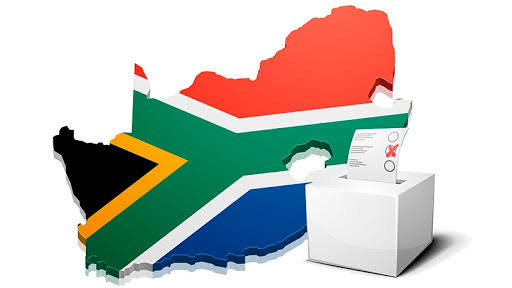
Chapter 2 section 19 sub-section (1), (2), (3) of the constitution gives political rights to all South African citizens. Specifically, sub-section (2) states that “every citizen has the right to free, fair and regular elections for any legislative body established in terms of the constitution”. This is a right prior to 1994 black people didn’t enjoy as the natives of the South African land. To gain these rights for black people, our forefathers shed their blood as they were victims of a government that didn’t realize them as people, rather saw them as slaves who mined African natural resources for them.
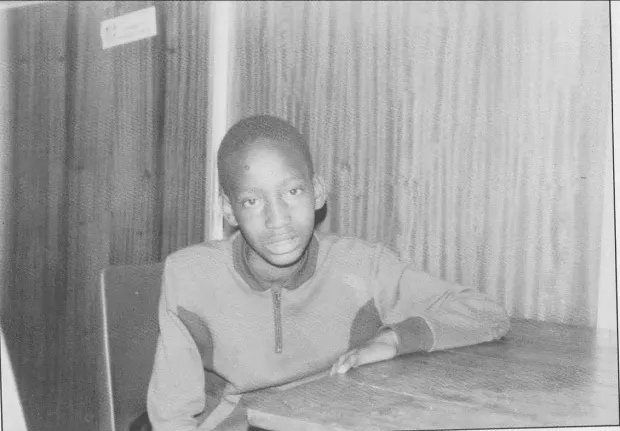
It would be a daunting and a sorrowful experience for our forefathers to rise from their graves and witness the youth fold its hands as the country sinks both economically and socially. Zolile Hector Pieterson would wish he picked a different path in his life then to die for people who spit on the face of the free education he fought for. Pixley Isaka Seme and other founders of the African National Congress (ANC) in 1912 would be devastated to witness the party turn against the black liberation struggle, as it does today.
The purpose of this column is to remind the youth why they vote, because they have seemingly forgot. On that note, also elaborate on the growing and ideologically diverse political landscape in the country. Furthermore, it attempts to pick a few aspects of life and politics that the youth can use to decide who’s worthy of their vote in 2024.
Since 1994, South Africa continues to realize a decline in voter turnout. It has declined from 86.87% in 1994 to 66.1% in the last general elections held in 2021. This is a massive decline of 20.77% over 27 years in seven elections. Disturbingly, the youth is at the bottom of the barrel both in registering to vote and voting. This then begs the question of, what is the future of South Africa and it 29-year-old democracy?
As the constitution of the Republic permits, the political landscape of South Africa has seen the rise of many political parties, hence, the formation of a multi-party democracy instead of a one-party state dominated by the ANC. This is why political analysts, journalists, and scholars predicts a possible fall of just under 50% for the ANC. This prediction would have been absurd if it was made in 2000 or 2004. Today it is seen as a high possibility which proves the significant changes in the political landscape of South Africa.
Furthermore, the Economic Freedom Fights (EFF) has claimed that “2024 is the new 1994” which would dethrone the ruling party. The Democratic Alliance has formed the Multi-Party Charter for South Africa with smaller political with the intent to dethrone the ruling party and set the EFF has their number one enemy. I believe the phenomenon to dethrone the ruling part stems from the many challenges that engulf the country. Load-shedding and unemployment are the leading challenges in this case. To a particular extent, the ANC has been accused of implementing neo-liberal policies like GEAR, ASGISA, NDP amongst others. This is an accusation I also argue to be the case.
Contemporary, the legislative body of the country discusses the amendment of the Electricity Regulation Act of 2006 to allow Independent Power Producers (IPP) to sell their excess electricity to the state. This a clear privatisation path of the minerals and energy industry of the country. However, while the ANC pulls extensively towards privatisation, the socialist party (EFF) calls for the nationalisation of land, mines and having a state bank. Its socialist call tends to resonate heavily with the lower class. This may be the case because they are the ones that feel the cutting effects of privatisation and a diminishing capability of the state, which is evident by the service delivery of our current government.
It’s quite interesting how things will play out in the 2024 elections. Listening to different opinions of the general public, the incumbent president of the Republic seems to have won the support of the upper and middle class with the August BRICS summit. This is the same summit that caused uproar in the international stage calling for the de-dollarisation and African development amongst other things. On the contrary, CIC Julius Malema of the EFF seems to have won the hearts of the poor in his speech during the 10th birthday celebration of the party. Furthermore, the EFF student command is gaining traction as it wipes off SASCO and DASO in SRC elections across the country. Therefore, Malema seems to have also won the heart students.
With this intense and ideologically diverse political landscape, I only wonder if the youth is aware of this tipping point in South African politics. Hence, is there a criterion the youth can utilize to select their next leader? Well, I suggest there is.
The youth is characterized by young, eager, creative, and flexible people. The state to them should be an enabler and a trigger of their creativity. Education should be a provider to their eagerness. All this forms the base of their criterion to decide who is worthy of their vote. They should also consider the diverse ideological approaches represented to them by political parties who seek to rule. Afterall, they are the future leaders and drives of our country. This is why their disconnect with politics is a major catastrophe that needs urgent address.
A huge responsibility is on the hands of the youth in 2024, and this is to consciously decide who should lead South Africa. This is their responsibility given the fact that whatever happens post 2024 elections will heavily affect them and their future. Also, voting in the next election will be a display of honour to the struggles of political freedom fought by our forefathers. If they act now, they prevent a future revolt of classes in South Africa.
Conclusively then, its imperative that the youth acknowledge their right to vote and understand its power. The fact that they’ve disconnected themselves with politics will only give them a future they neglected, and which doesn’t resonate with their needs. Hence, turmoil will rise once they recognise that they persist in an environment that kills their creativity and feeds they eagerness with ill-information. With that being the case, the criteria they should adopt is to ask themselves which government recognizes and enables their creativity, and which government provides to them an education fulfils their eagerness?
-MediaHouse150