 Mfundo Ndima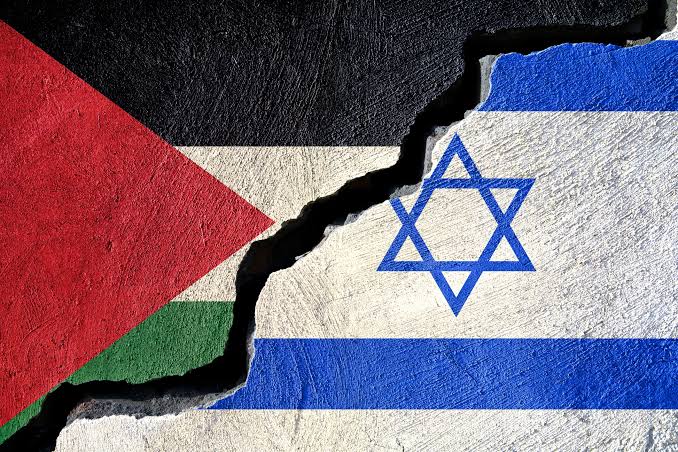
The world remains divided between the justification of the on-going conflict between the Hama’s and the government of Israel. On domestic soil, the president of the African National Congress (ANC) and it’s NEC members have come out in solidarity with the people of Palestine. The Economic Freedom Fighters (EFF) has also remained in solidarity with the people of Palestine, further calling for the expulsion of the Israel embassy in South Africa. On the other hand, the Patriotic Alliance (PA) has publicly supported the people of Israel which led to Dr Allan Boesak rejecting the remaining of Louis Botha Street in his name by the organisation. The rest of the country remains divided with differing views on which side should be taken with regards to conflict. Some South Africans maintain the view that the country shouldn’t meddle in the conflict because of the historical atrocities committed by the Arabs nation to blacks. On the global stage, the United States (US) has remained is solidarity with Israel and regards the Hama’s has terrorists. It went further to vowing to provide Israel with necessary arms to defend itself against the terrorist attack. On the other hand, the president of Iran and Syria have called for the support for the people of Palestine from the Islamic countries.
However, the purpose of this piece is to give a historical context of the conflict and it grounds dating back to the early 1900’s. It is to layout the chronical events that escalated the conflict, which will perhaps explain the various stances taken by world with regards to the conflict.
During World War I, the Balfour Declaration was issued on November 2,1917. The declaration was in a letter format from the then Britian’s foreign secretary, Arthur Balfour, to Lionel Walter Rothschild, a figure of the British Jewish community. The declaration was also part of the British Mandate for Palestine which promised the European Jews the establishment of a Jewish permanent home on the land of the Palestine.
The Jewish nationalist movement, Zionism, was fathered by a journalist Jew, Theodor Herzl as a political movement. On 15 May 1948, the Zionist launched the Nakba, declaring the establishment of a Jewish state. The Nakba of the Zionist military forces expelled at least 750 000 Palestinians from their homes occupying the majority of the Palestine land. This formed the isolated and bordered West Bank and the Gaza Strip. The Nakba would remain until January 1949.
Prior to the Nakba, in 1947 the United Nations General Assembly adopted a resolution to partition Palestine. The resolution carried a notion of two separate state, a Jewish state, and an Arab state. While the Arab community neglected the resolution, the Jewish community in Palestine considered the resolution as a legal basis for the establishment of the state of Israel.
Fastrack to the late 1960’s. On 5 June 1967, Israel which was now a “legitimate” Jewish state launched the Naksa. This was the second forced military displacement of people of Palestine as the West Bank and Gaza Strip were occupied. Later that year, construction of settlements began for the people of Palestine, and they lived under military occupation which discriminated them. The Jewish settlers were afforded all the privileges and rights of being an Israel citizen.
What then followed was the first and second Intifada in 1987-1993 and 2000 respectively. Furthermore, the signing of the Oslo Accords in 1993. The first Intifada was characterised by a series of protests and military conflicts between the Palestinians and Isarel forces. The Hama’s movement was also established in this moment which is an armed resistance Muslim Brotherhood against the Israeli occupation. The second Intifada was characterized also by armed resistance of Palestinians and an uprising of the people of Palestine. What followed was the construction of the concrete wall and the installation of the electric fence, which on the side of the separation was what was similar to the Bantustans created by the Apartheid South African government.
Since then, Isarel has launched four prolonged military assaults on Gaza in 2008, 2012, 2014, and 2021. These military attacks have taken the lives of many Palestine civilians and children, also the life of Israeli people. Additionally, Israel has maintained control over essential services to Gaza including water, electricity, and materials necessary to convention life.
With the historical context above, it emerges clear that the on-going conflict is not a matter of religion or antisemitic. Rather it is a matter of land occupation and discrimination of the native people of land. It’s also not a matter of terrorist attack but of armed resistance to fight for equal treatment and rights. The establishment of an ethnic-religious Jewish state in the early 1900’s already communicated a message of exclusion of the people of Palestine. This highlights the similarities between Apartheid South Africa and the on-going conflict between the Hama’s and Israel government. The similarity being failing to recognize the other.
-MediaHouse150