 Mfundo Ndima
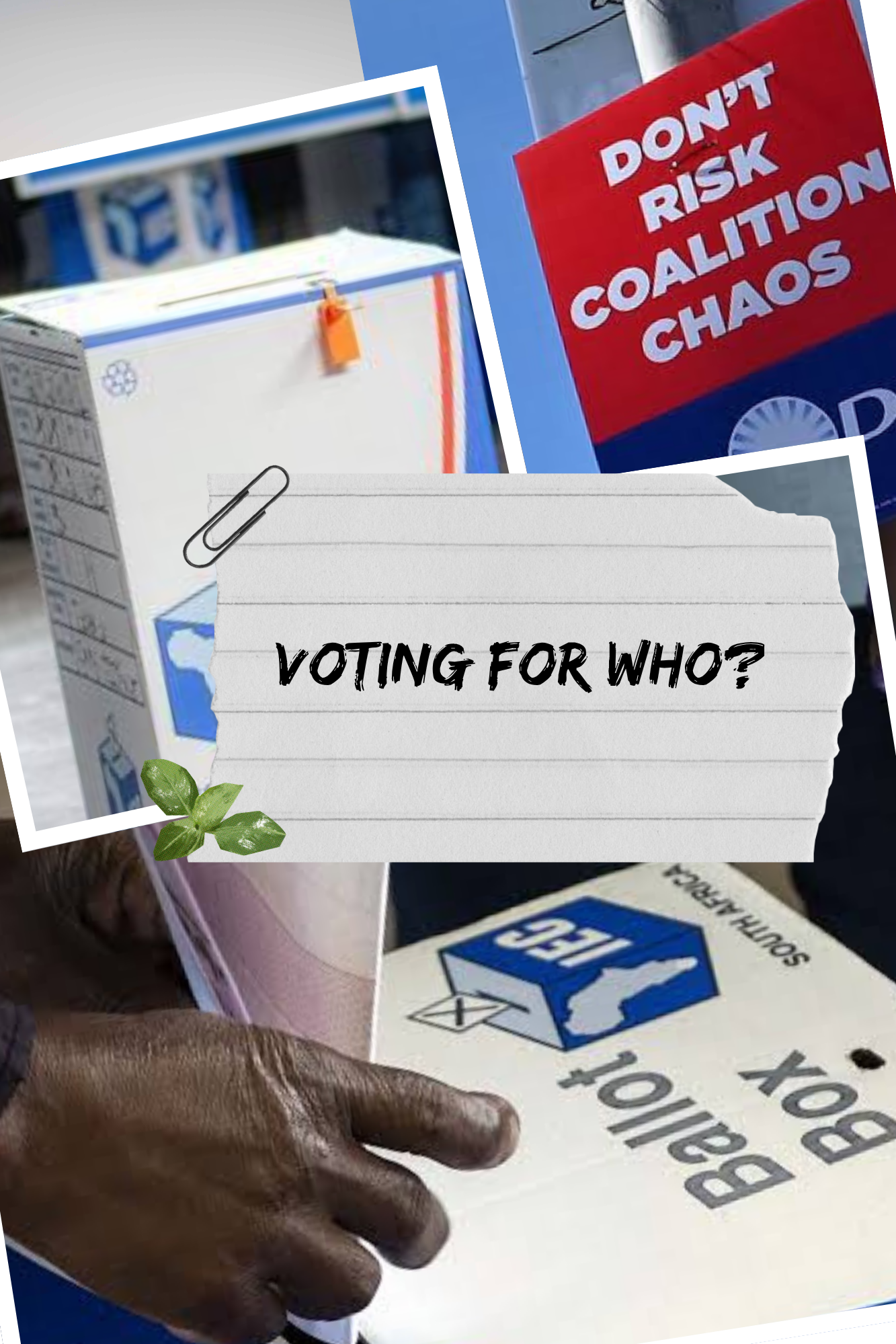
“In a word, I am arguing that South Africa’s splintered party system is blurring political choice, weakening accountability, and encouraging citizens to withdraw from the ballot altogether. That makes it a subtle but serious warning sign of democratic erosion case study”
The attitude towards the ballot is changing. The decision on the ballot is also changing. No longer is the African National Congress (ANC) the hope of the day. The voters participating in the ballot are shrinking and so is the legitimacy of the incumbent and the democratic governance system as we know it.
South Africa’s democracy is not failing because its institutions have collapsed. It is being strained by something quieter: fragmented party politics, declining participation, and coalitions that struggle to turn electoral power into a accountable government. The 2026 Local Government Elections, happening today, may be the clearest test yet of whether South Africa’s coalitions can govern coherently in a post-majority political era.
A changing ballot
The attitude towards the ballot is changing. So too is the decision voters make when they stand before it. For decades, our electoral politics were broadly organized around the ANC’s dominance; that assumption no longer holds in the same way. The ANC came out of the 2024 national and provincial elections with 40.18% of the national votes, losing its outright parliamentary majority for the first time since 1994.
The ballot itself has not lost legitimacy. South Africa’s electoral institutions continue to administer elections, and the Independent Electoral Commission (IEC) has described the 2024 polls as peaceful, free and fair. The ANC never sought to hold on to power by manipulation or violence after losing its majority democratically. The crisis is political rather than administrative: voters are being asked to choose among parties whose differences are often unclear, while coalition bargaining increasingly determines who governs. This case was best illustrated in KwaZulu-Natal, the uMkhonto WeSizwe Party won most of the provincials seats, but coalition talks prevailed with its exclusion or its election boycott.
Splinter Fragmentation without distinction
Coalition politics is not inherently a chaotic failure. In a diverse society like the “Rainbow Nation” we have, no single party should be assumed entitled to permanent power. The problem arises when fragmentation produces not so meaningful and clear ideological choice, but a crowded field of splinter parties, personal factions and opportunistic alliances.
South Africa’s 2024 ballot featured 52 parties and six independent candidates. That plurality can enrich democracy, but it can also blur accountability and choice. When voters cannot readily distinguish one party’s program from another’s, the vote becomes less an expression of collective purpose and more a gamble on post-election deals.
The choice can feel especially unclear within broad political camps. Voters may ask what materially separates one reform-oriented opposition party from another; equally, they may struggle to identify the principle difference between the ANC, the uMkhonto weSizwe Party and the Economic Freedom Fighters (EFF) when they all compete for overlapping constituencies. The difference also is very thin in policy and values between the Democratic Alliance, Build One South Africa, RISE Mzansi, and ActionSA. This is an oversimplification, but it captures a real democratic problem: that choice without clarity weakens representation, produces personalized factionalism, and monetizes the vote.
The GNU as a warning
The 2024 election and the formation of the Government of National Unity (GNU) offered a preview of coalition politics. No party won a majority, forcing parties that had campaigned against one another to negotiate a governing arrangement in a matter of weeks. The ANC received 40.18%, the Democratic Alliance (DA) climbed to 21.81%, the MK party got 14.58%, and the EFF stood at 9.52% of the national vote. The GNU, however, prevailed as an ANC-DA coalition.
The GNU’s first major test came over the 2025 budget, when the DA publicly opposed the fiscal framework and abstained rather than supporting it. That episode illustrated the central danger of coalition government: parties may share office while remaining divided over the basic direction of policy. The statement of intent, which was supposed to be the document that carefully outlines the coalition policy direction, remains vague in the matter and therefore useless. Coalitions can work, but only when partners negotiate clear priorities, accept collective responsibility and allow voters to understand who is accountable for what, and therefore, coalitions are not inherently chaotic failures.
Participation is declining
The most alarming evidence is not merely that our politics and ballot is fragmented vaguely; it is that fewer South Africans are now deciding just not to participate in it.
In 1994, the turnout among registered voters was 85.80%; in 2004, it was 76.73%. Twenty years later in 2024, it fell to 58.64%—the lowest turnout since the end of apartheid. Measured against the estimated voting-age population, only about 41% of eligible South Africans voted in 2024 elections.
Low turnout does not automatically invalidate an election. But it does weaken the democratic mandate of those who govern. When a majority of eligible citizens stay home, elected governments must ask whose consent they are actually exercising—and why so many citizens no longer believe voting will change their material circumstances. In explicit terms, they must begin to question their legitimacy as leaders and question their mandates on who it actually represents.
Learning from elsewhere
South Africa is not alone in confronting unstable coalition politics. The United Kingdom and France have both recently experienced governments whose authority depended on fragile parliamentary coalitions, internal party divisions and difficult bargaining for the compromise of who takes Prime Minister. The lesson is not that coalitions are doomed chaotic failures; it is that they require rules, discipline and transparency. A planned-out plan that moves beyond divides and forms a coherent government working for the people.
South Africa inherited many features of its constitutional and governmental system from elsewhere as a colonial legacy, but it must now develop its own coalition culture. That means asking hard questions before Election Day: Which parties can govern together without abandoning their mandates? What policy commitments are non-negotiable? How will voters be able to judge whether a coalition has kept its promises, like what benchmark did we set for the GNU?
A wake-up call, not a verdict
The “rainbow nation” ideal remains powerful in moments of national unity, from sport to disaster responses. But unity in diversity must also appear in the ballot box – in clear choices, credible parties and governments capable of acting collectively. If it does not, citizens may conclude that democracy delivers symbolism without service.
The 2026 Local Government Elections should therefore be treated as a wake-up call, not a final verdict. In several metros, no party may emerge with a clear majority, making coalition formation immediate rather than theoretical scenarios. This is the indication generally from all polls, except for Cape Town and eThekwini metros where the DA and MK party respectively can get a majority. However, the question is not simply who wins. It is whether South Africa can build coalitions that are stable, accountable and intelligible to the people they claim to represent
Democracy is not preserved by voting alone. It is preserved when voting produces clarity, representation and a government that can be held to account. In a word, I am arguing that South Africa’s splintered party system is blurring political choice, weakening accountability, and encouraging citizens to withdraw from the ballot altogether. That makes it a subtle but serious warning sign of democratic erosion case study—not because the state has dismantled democratic institutions, but because the quality of democratic competition, participation, and accountability is under strain.
Either way, let’s go out and vote.
-MediaHouse150